Yellow lines separate traffic going in opposite directions; white lines separate lanes going the same way. A broken line means you may cross it when safe; a solid line means don't cross it (except to turn, for some yellow lines). Everything else, center turn lanes, stop lines, crosswalks, diamonds, builds on those two ideas.
This is the overview. Each marking has a deeper guide linked below.
Yellow lines: the center of the road
| Marking | Meaning |
|---|---|
| Single broken yellow | Two-way road; passing allowed in both directions when safe |
| Solid yellow on your side | No passing for you |
| Double solid yellow | No passing either way; turning into a driveway is usually allowed |
| Two double-yellow sets, 2+ ft apart | A painted barrier: never cross |
| Solid + broken yellow on each side | Center left-turn lane |
Details: solid vs broken yellow line, can you cross a double yellow line, center turn lane rules.
White lines: lanes going your way
| Marking | Meaning |
|---|---|
| Broken white | Lanes going the same direction; change lanes when safe |
| Solid white | Stay in your lane; change only if you must |
| Double solid white | Don't cross |
| Solid white edge line | The edge of the road; the shoulder is beyond it |
Lines across the road
- Stop line: a wide white line where you stop for a stop sign or red light.
- Crosswalk: two white lines or wide stripes; stop before it.
- Yield line: a row of white triangles ("shark teeth") pointing at you, where you yield.
Words, arrows and symbols
Arrows in a lane tell you which way that lane may go: a left arrow alone means the lane must turn left. A white diamond marks an HOV or carpool lane. Bike lane symbols mark lanes for cyclists; you may cross them to turn, after yielding to bikes.
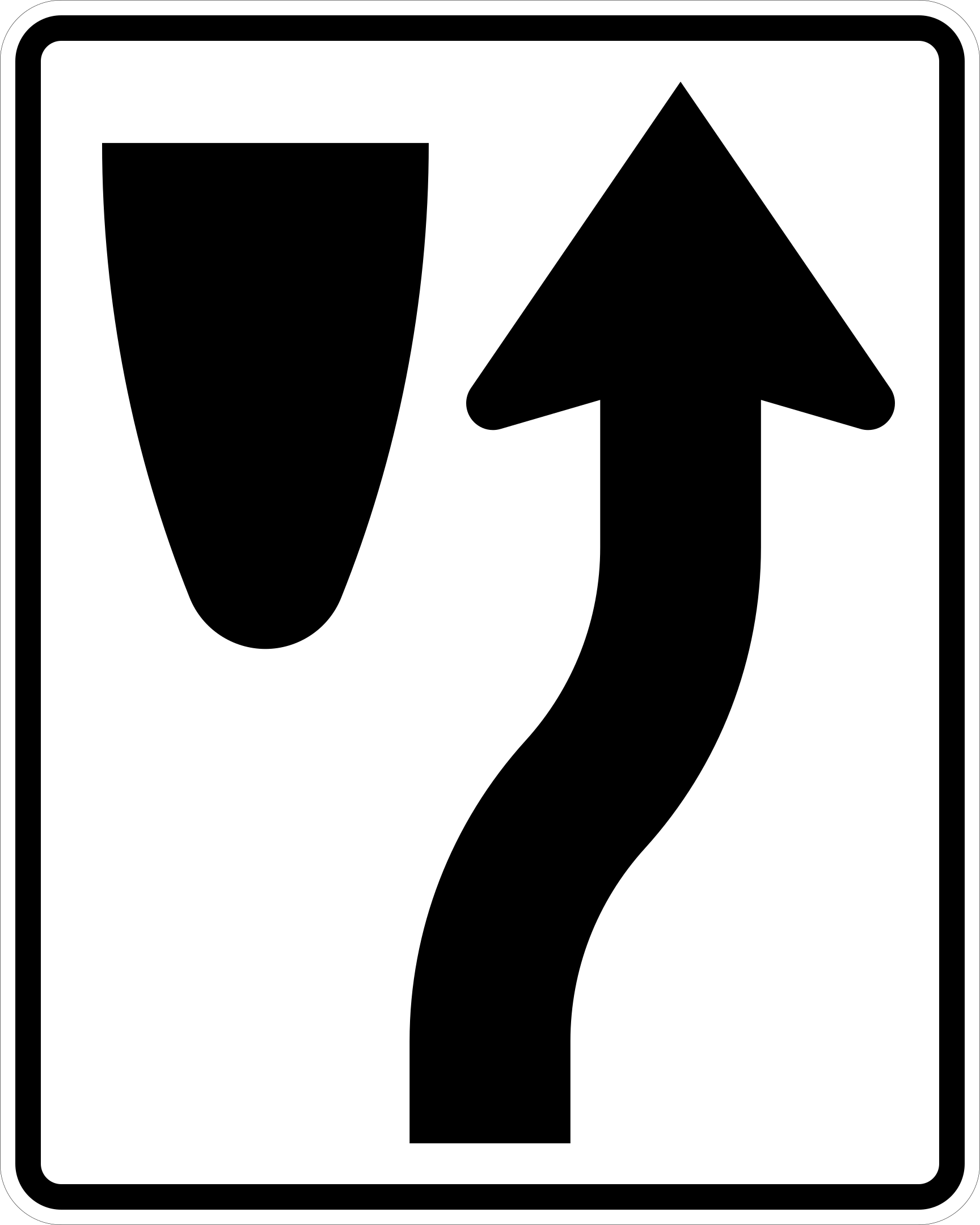 Keep RightMUTCD R4-7
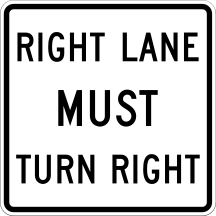 Right Lane Must Turn RightMUTCD R3-7R
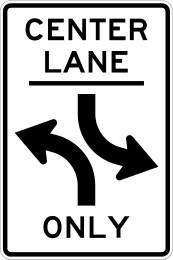 Center Lane Left Turn OnlyMUTCD R3-9b
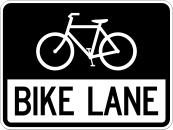 Bike LaneMUTCD R3-17
When lines and signs disagree
Sometimes paint wears off, or temporary lines in a work zone cross the old ones. The order of authority is: a police officer or flagger first, then signs and signals, then the lines. In a work zone, follow the orange signs, cones and the new (usually brighter) temporary markings, even if faded old lines point another way.
Permit tests love line questions because they look easy and aren't: the right answer about a double yellow line or a center turn lane is often the less obvious one. Learn the yellow/white split and the broken/solid split first, and the rest follows.
Practice it
Try the "Lines on the road" topic in Signal LabStart ›Rule sources: yellow vs white lines, passing lines, center turn lane.