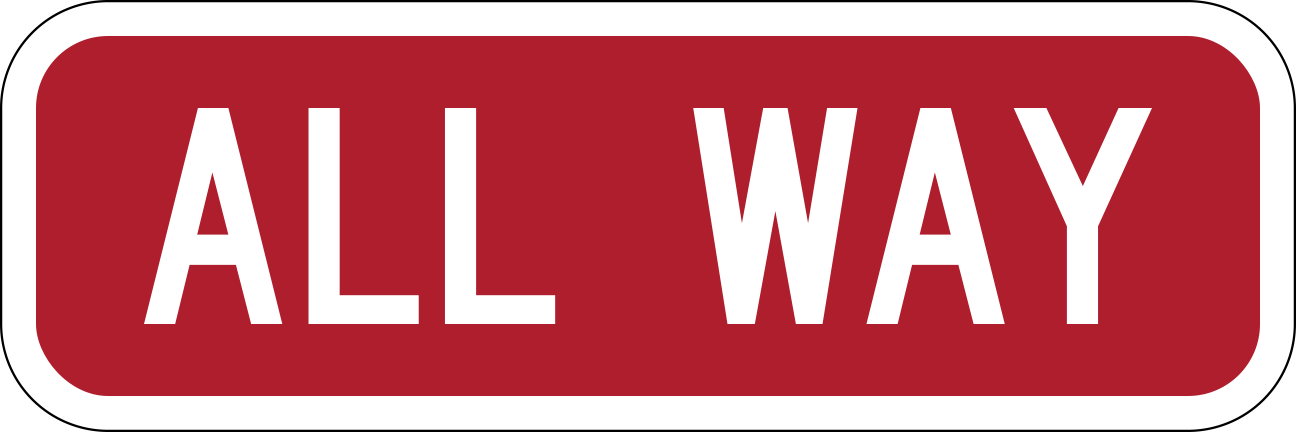
A broken (dashed) yellow line on your side of the road means you may pass when it is safe. A solid yellow line on your side means you may not. When the center has one solid and one broken line, the line closest to you is the one that applies to you.
Yellow center lines separate traffic going in opposite directions, so passing always means moving into the lane of oncoming traffic for a few seconds. The lines tell you where the road designers decided that is too dangerous: curves, hills, intersections and places where you can't see far enough ahead.
The four patterns
| Center line | You may pass | The other direction may pass |
|---|---|---|
| Single broken yellow | Yes, when safe | Yes, when safe |
| Solid on your side, broken on theirs | No | Yes, when safe |
| Broken on your side, solid on theirs | Yes, when safe | No |
| Double solid yellow | No | No |
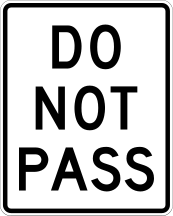 Do Not PassMUTCD R4-1
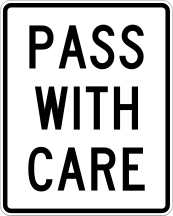 Pass With CareMUTCD R4-2
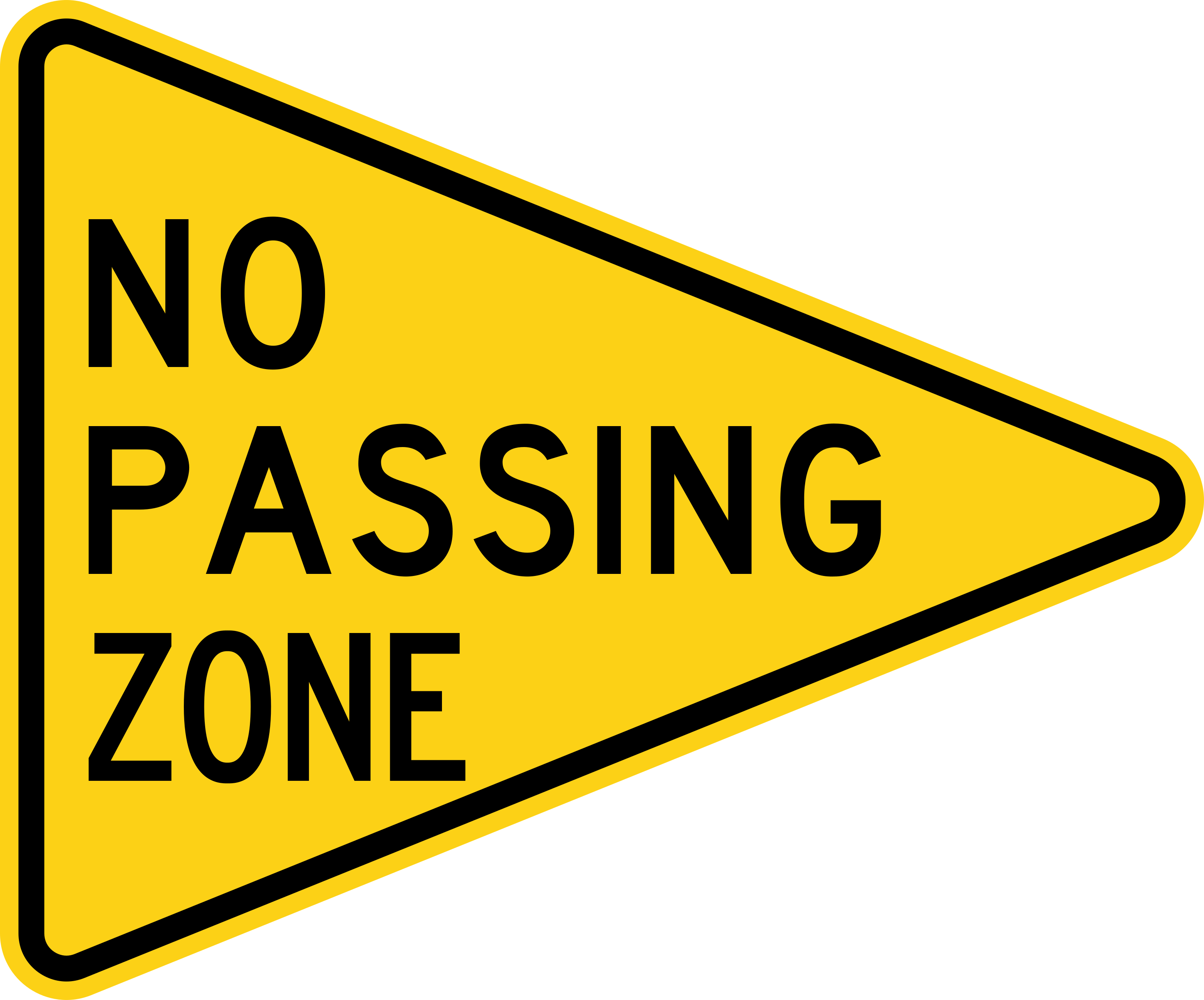 No Passing ZoneMUTCD W14-3
A No Passing Zone pennant on the left side of the road marks where a solid line begins on your side. Do Not Pass and Pass With Care signs mark the start and end of longer no-passing stretches.
"When safe" is doing a lot of work
A broken line only means passing is legal. Whether it is safe is up to you:
- You can see far enough ahead to finish the pass before any oncoming car could reach you.
- You won't have to speed far over the limit to get by.
- There's no intersection, driveway, railroad crossing or hill crest coming up.
- You have room to get back into your lane without cutting off the car you passed.
If any of those is uncertain, stay behind. A slow truck costs you a minute; a failed pass on a two-lane road is how head-on crashes happen.
How to pass, step by step
- Check that the line on your side is broken and the road ahead is clear.
- Check your mirror and blind spot, and signal left.
- Move out smoothly, accelerate, and pass without lingering beside the other vehicle.
- Signal right and return when you can see the passed vehicle's headlights in your inside mirror.
The exception to solid lines
A solid yellow line forbids passing, not turning. In most states you may cross it to turn left into a driveway or side street after yielding. See can you cross a double yellow line for the details.
Practice it
Read the lines and decide in Signal LabStart ›The rule and its sources: when the lines let you pass and where never to pass.