You may not cross double solid yellow lines to pass another vehicle. In most states you may cross them to turn left into or out of a driveway, alley or side street, as long as the way is clear. Two sets of double yellow lines two feet or more apart are a barrier: never cross those.
What double yellow lines mean
Yellow lines separate traffic going in opposite directions. Two solid yellow lines side by side mean passing is not allowed from either side. They are painted where passing is dangerous: on curves, over hills, near intersections and where the road is narrow.
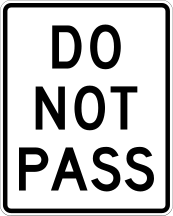 Do Not PassMUTCD R4-1
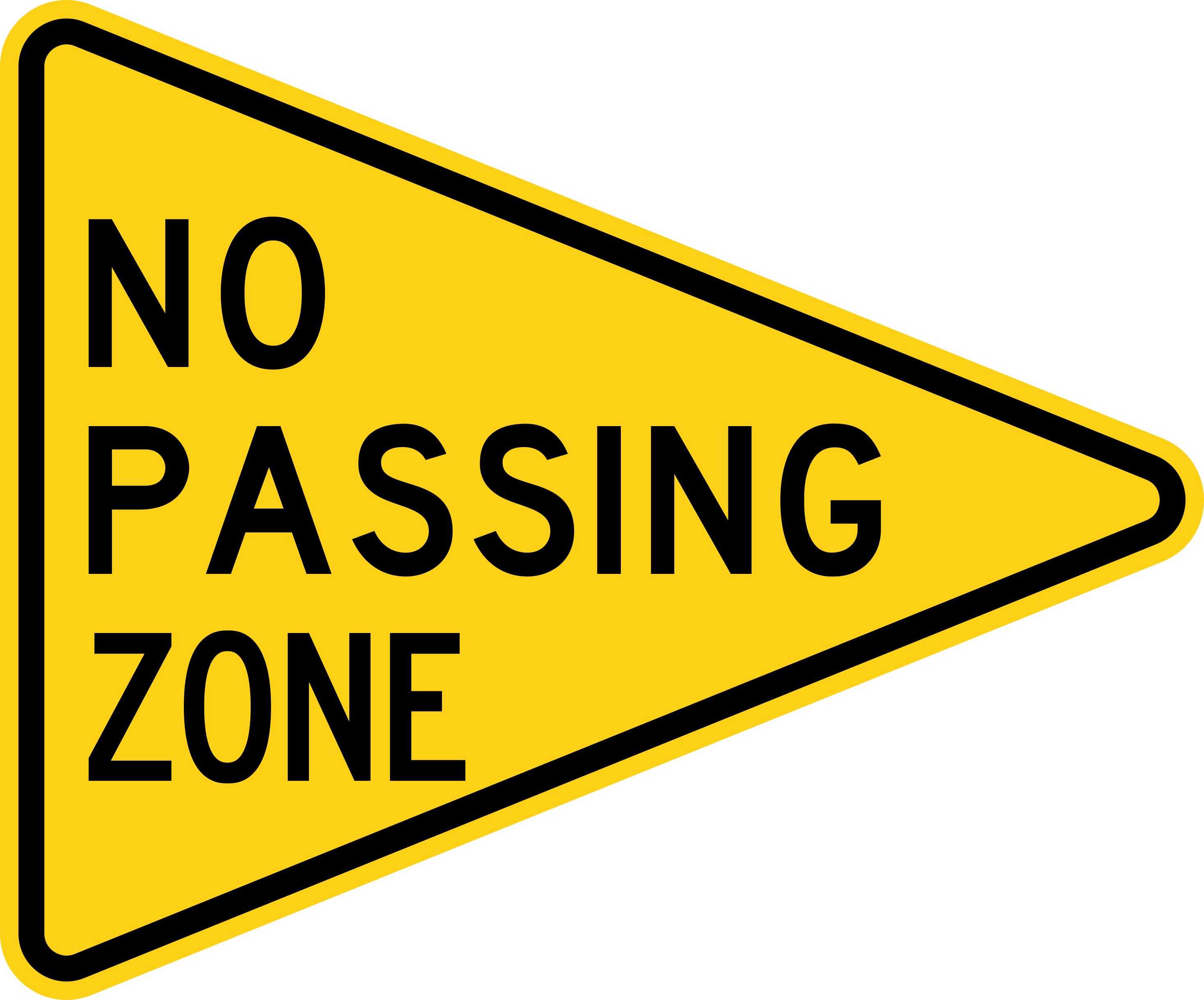 No Passing ZoneMUTCD W14-3
| Line on your side | Can you pass? |
|---|---|
| Double solid yellow | No |
| Solid yellow on your side, broken on the other | No |
| Broken yellow on your side | Yes, when it's safe |
| Two sets of double yellow, 2+ feet apart | Never cross, even to turn |
When crossing is allowed
The ban is on passing, not on crossing the line at all. In most states you may cross a double yellow line to turn left into a driveway or a side street, or to turn left out of one, once you have yielded to oncoming traffic. Where a sign prohibits the turn, you can't make it.
Crossing to pass vs crossing to turn
Picture a slow farm tractor on a two-lane road with a double yellow line. However slow it is, you stay behind it until the line on your side turns broken and you can see far enough ahead. Now picture the same road and a driveway on your left. You slow down, signal, wait for oncoming traffic to clear, and turn across the double yellow into the driveway. The first is passing and is not allowed; the second is turning and usually is.
The same goes for leaving a driveway: you may cross the double yellow to turn left onto the road, after yielding to traffic in both directions.
Why it matters on the test
Line questions show up on nearly every permit test, and the double yellow is the one with a twist: people learn "never cross it" and then miss the question about turning into a driveway. Remember the rule as no passing, turning is fine when clear.
Practice it
See the lines and pick what you do in Signal LabStart ›The full rule and its source are on our rules of the road page, together with what yellow and white lines mean.