At a four-way (all-way) stop, the first vehicle to come to a full stop goes first. If two vehicles stop at the same time, the driver on the left yields to the driver on the right. If two stop together facing each other, the one going straight or turning right goes before the one turning left.
That is the whole rule. The hard part is applying it in the two seconds you have at a real intersection, which is why it is one of the most-missed topics on the permit test.
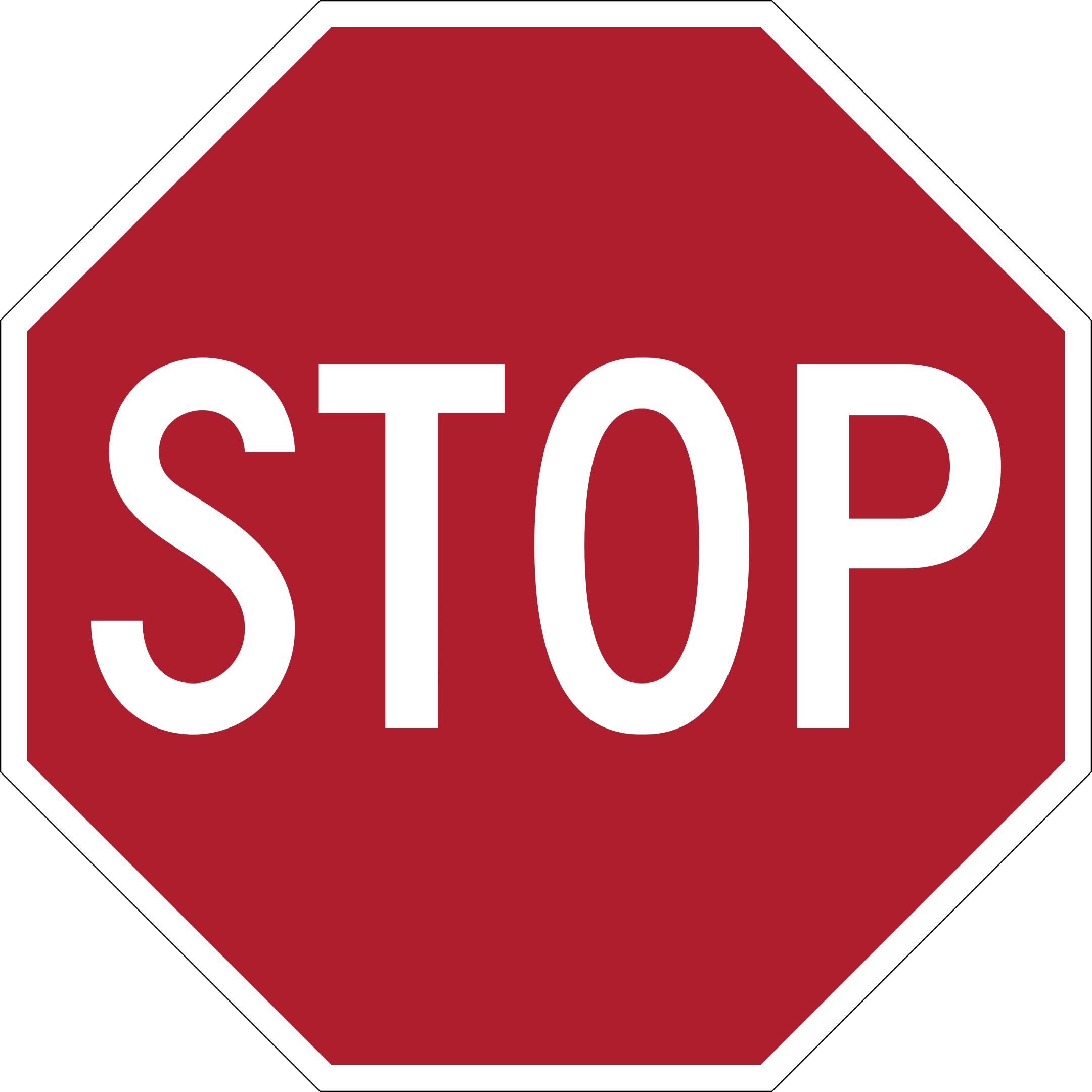 StopMUTCD R1-1
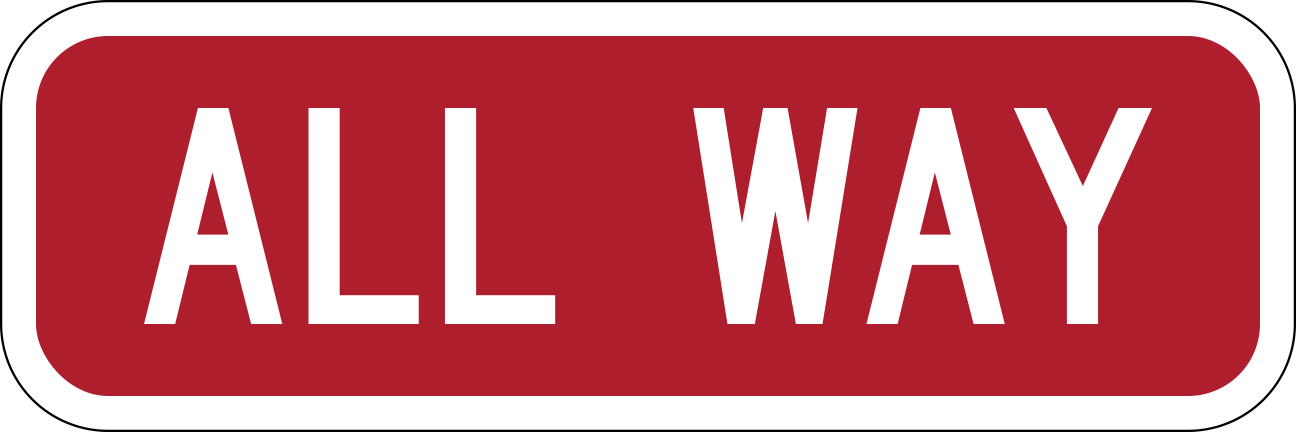 All Way (plaque)MUTCD R1-3P
Rule 1: first to stop, first to go
Watch the other approaches as you pull up. Every car that was already stopped when you arrived goes before you, in the order they stopped. Cars that arrive after you wait for you. A full stop means the wheels stop turning at the white line (or before the crosswalk if there is no line); rolling up slowly does not "save your place".
Rule 2: stopped together? The car on the right goes
If you and another driver come to a stop at the same moment and the other car is on your right, it goes first. If it is on your left, you go first. This is the rule most people forget. A quick way to remember it: look right, yield right.
Rule 3: facing each other? The left turn waits
Two cars stopped together on opposite sides can usually go at the same time, because their paths don't cross. The exception is a left turn: a car turning left crosses the path of the car coming the other way, so it waits for the car going straight or turning right.
| Situation | Who goes first |
|---|---|
| One car stopped before the others | The first car to stop |
| Two cars stop together, at right angles | The car on the right |
| Two cars stop together, facing each other, both straight | Both can go |
| Two cars stop together, facing each other, one turning left | The car going straight or turning right |
| Someone is in the crosswalk | The person on foot, before any car crossing their path |
What if all four arrive at once?
The yield-to-the-right rule can't settle a perfect four-way tie, because every car has someone on its right. Real drivers settle it by eye contact and a wave. Don't wave yourself through: let the other drivers go, and start only when it is clear someone has given you the turn.
Common mistakes
- Rolling stops. If you don't stop fully, you haven't "arrived" in the eyes of the other drivers, and on a road test it is an automatic fail in many places.
- Going because the car on your left went. Order is by arrival, not by turns around the circle.
- Forgetting people on foot. Pedestrians in the crosswalk go before every car whose path they cross.
The best way to make this automatic is to solve a few dozen intersections. Our puzzle shows you the cars, when each one stopped and where it is going, and you tap them in the order they may go.
Try Right of Way: tap the cars in the order they may goStart ›The rule comes from the state driver handbooks; see all-way stop rules and the tie-breaker with their sources.