Warning Signs
Warning signs tell you about something ahead that you might not see yet: a curve, a merge, a crossing, a signal or a change in the road.
They are yellow, and most are diamonds. Pedestrian, bicycle and school warnings may be fluorescent yellow-green so they stand out, and work-zone warnings are orange.
Every warning sign, and what to do
35 signs · MUTCD codes shown for reference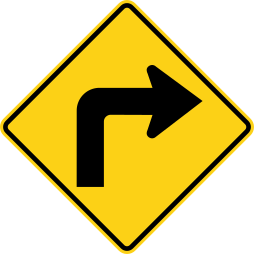
TurnMUTCD W1-1R
A sharp turn is ahead in the direction of the arrow. Do: Slow down before the turn.
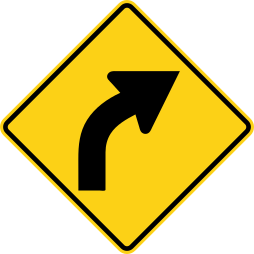
CurveMUTCD W1-2R
The road curves ahead in the direction of the arrow. Do: Slow down before the curve, not in it.
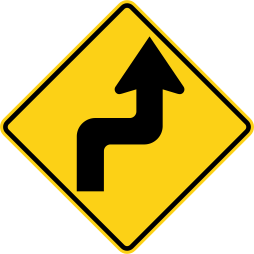
Reverse TurnMUTCD W1-3R
Two sharp turns are ahead, first one way and then the other. Do: Slow down well before the first turn.
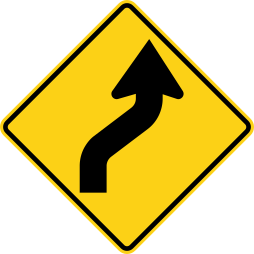
Reverse CurveMUTCD W1-4R
The road curves one way and then back the other way. Do: Slow down and stay in your lane through both curves.
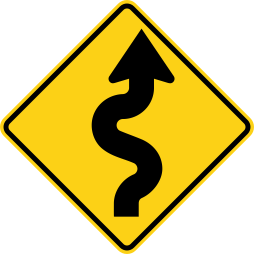
Winding RoadMUTCD W1-5R
A series of three or more curves is ahead. Do: Slow down and keep to your lane until the road straightens.
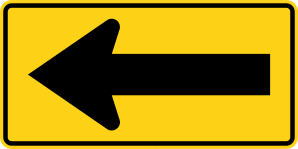
Large ArrowMUTCD W1-6
The road changes direction sharply the way the arrow points. Do: Slow down and follow the arrow's direction.

Chevron AlignmentMUTCD W1-8
Marks the outside edge of a sharp curve and shows which way it bends. Do: Slow down and steer through the curve the way the chevrons point.

Cross RoadMUTCD W2-1
A four-way intersection is ahead. Do: Watch for traffic crossing or entering from both sides.

Side RoadMUTCD W2-2
A side road joins from the side shown. Do: Watch for vehicles entering from that side.

T IntersectionMUTCD W2-4
The road you are on ends ahead at a T. Do: Prepare to stop and then turn left or right.

Y IntersectionMUTCD W2-5
The road splits into two branches ahead. Do: Slow down and pick your branch early.
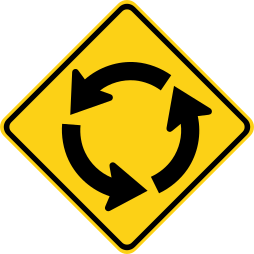
Circular IntersectionMUTCD W2-6
A roundabout is ahead. Do: Slow down, yield to traffic already in the circle, and drive counterclockwise.

Stop AheadMUTCD W3-1
A stop sign is ahead. Do: Slow down and be ready to stop.

Yield AheadMUTCD W3-2
A yield sign is ahead. Do: Slow down and be ready to give the right-of-way.
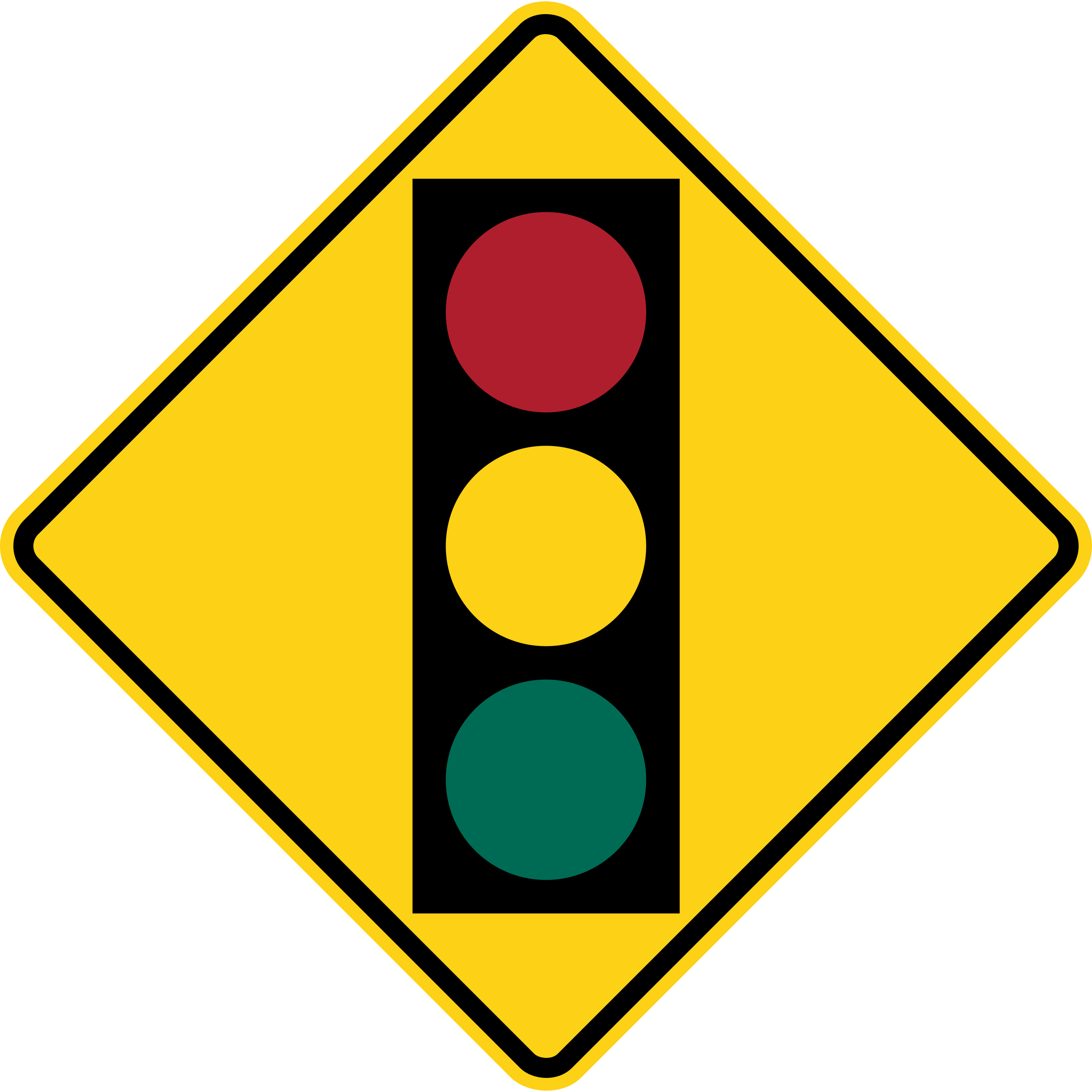
Signal AheadMUTCD W3-3
A traffic signal is ahead that you may not see yet. Do: Slow down and be ready to stop for the light.
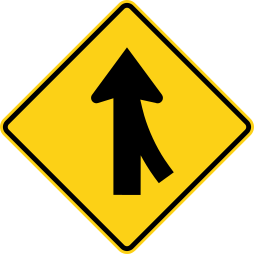
MergeMUTCD W4-1
Traffic from another lane or road will join yours ahead. Do: Watch for merging vehicles and adjust your speed so they can move in safely.
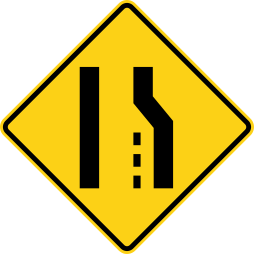
Lane EndsMUTCD W4-2
One lane ends ahead and the road has fewer lanes. Do: If your lane is ending, signal and move over when it is safe.
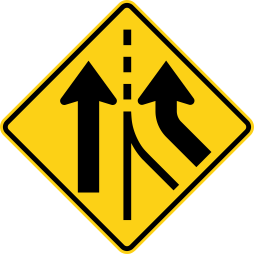
Added LaneMUTCD W4-3
Traffic enters in its own new lane, so no one has to merge. Do: Stay in your lane and watch for vehicles in the new lane.
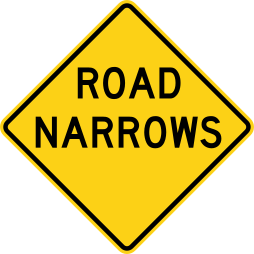
Road NarrowsMUTCD W5-1
The road gets narrower ahead. Do: Slow down and watch for oncoming traffic.
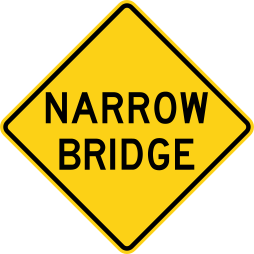
Narrow BridgeMUTCD W5-2
A bridge ahead is narrower than the road. Do: Slow down and be ready to let oncoming vehicles cross first.
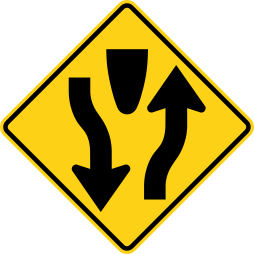
Divided Highway BeginsMUTCD W6-1
The road becomes a divided highway, with a median between directions. Do: Keep to the right of the median.
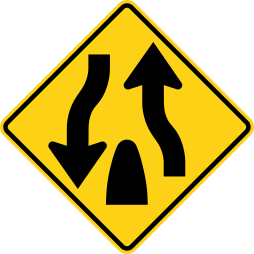
Divided Highway EndsMUTCD W6-2
The median ends and traffic in both directions will share the road. Do: Keep right; oncoming traffic will be beside you.
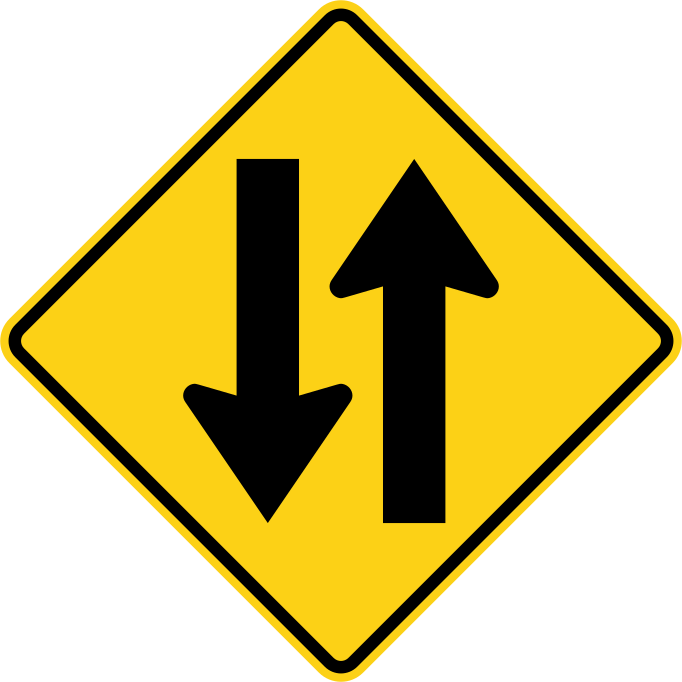
Two-Way TrafficMUTCD W6-3
The road ahead carries traffic in both directions. Do: Stay right; oncoming vehicles share this road.
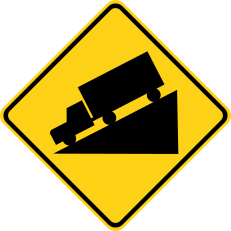
HillMUTCD W7-1
A steep downhill grade is ahead. Do: Slow down and use a lower gear to save your brakes.
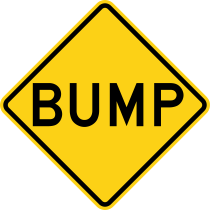
BumpMUTCD W8-1
There is a bump in the road ahead. Do: Slow down so you keep control of the vehicle.
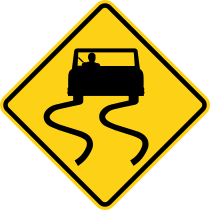
Slippery When WetMUTCD W8-5
The road surface becomes slippery in wet weather. Do: When it is wet, slow down and avoid sudden braking or steering.
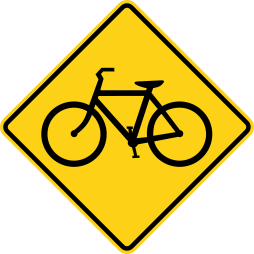
BicyclesMUTCD W11-1
Bicycles may cross or share the road ahead. Do: Watch for cyclists and give them room when passing.
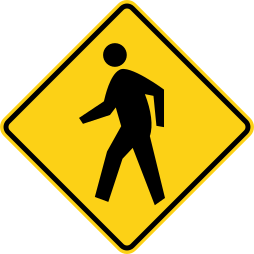
Pedestrian CrossingMUTCD W11-2
People may be crossing the road ahead. Do: Slow down and be ready to yield to pedestrians.
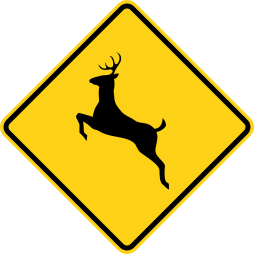
Deer CrossingMUTCD W11-3
Deer often cross the road here. Do: Slow down and watch the roadside, especially at dawn and dusk.
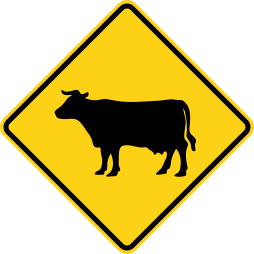
Cattle CrossingMUTCD W11-4
Farm animals may be on or crossing the road. Do: Slow down and be ready to stop for livestock.
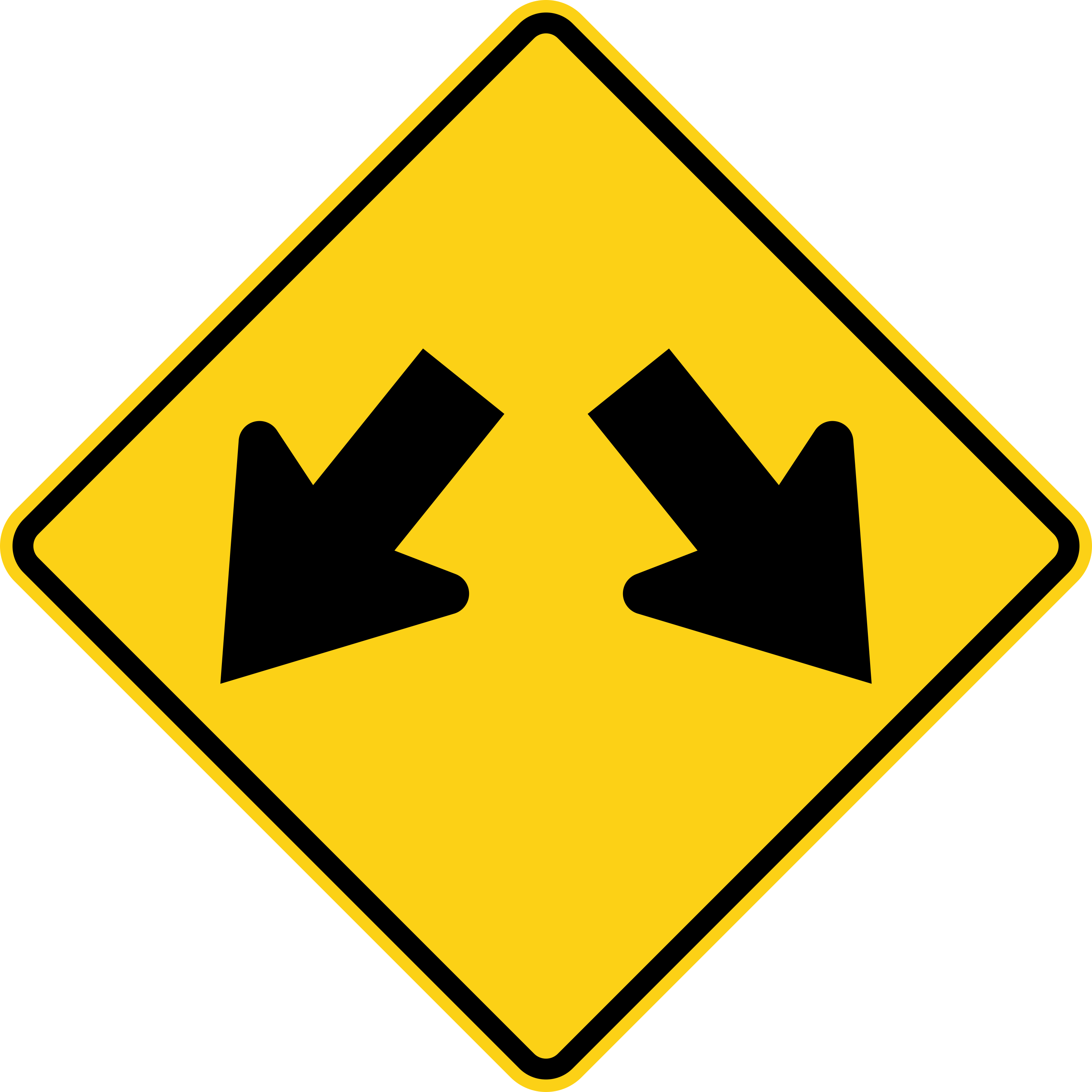
Double ArrowMUTCD W12-1
Traffic may pass on either side of an island or object ahead. Do: Go around the obstruction on the left or the right.
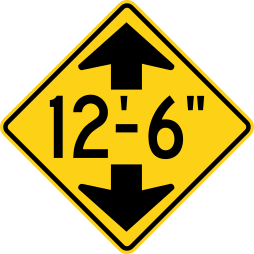
Low ClearanceMUTCD W12-2
An overpass or structure ahead has limited height clearance. Do: If your vehicle is taller than the height shown, do not go under it.
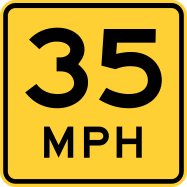
Advisory Speed (plaque)MUTCD W13-1P
Placed under a warning sign: a safe speed for that hazard. Do: Slow to the speed shown for the curve or condition, even though it is not the legal limit.
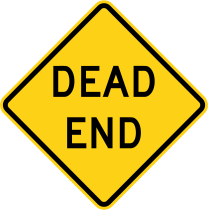
Dead EndMUTCD W14-1
The road ahead does not go through. Do: Plan to turn around, or take another road.
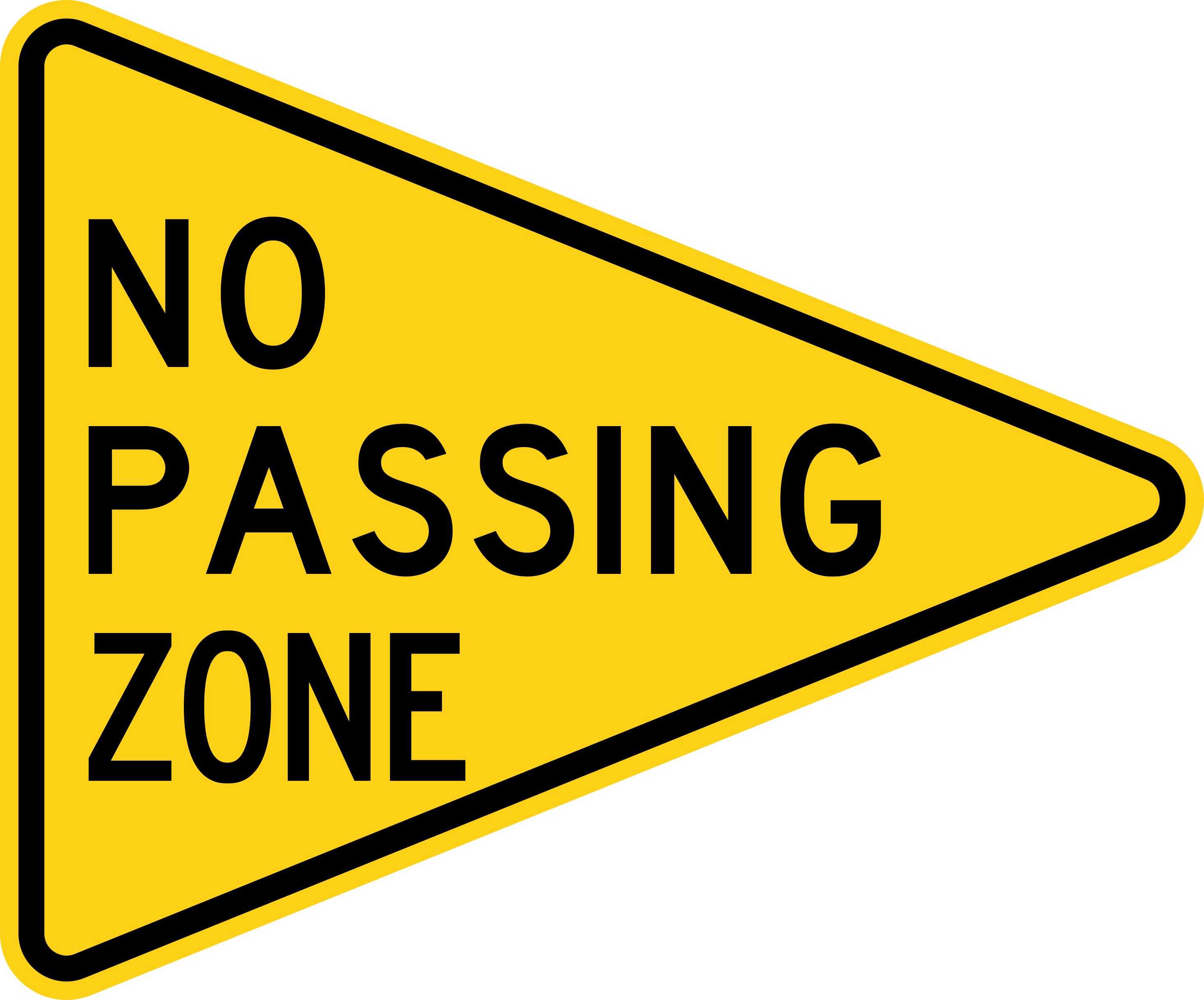
No Passing ZoneMUTCD W14-3
A no-passing zone begins here on a two-lane road. Do: Do not start passing; the zone lasts until a Pass With Care sign or the end of the solid line.
Warning signs quiz
Question 1 of 10Warning
What should you do when you see this sign?
Tip: press 1–4 to answer.
Questions people ask
What color are warning signs?
Yellow with black symbols or words. Pedestrian, bicycle and school warnings may be fluorescent yellow-green; temporary work-zone warnings are orange.
What shape are most warning signs?
A diamond. A few are rectangles (like the large arrow and chevrons), the railroad advance warning is round, and the no-passing-zone sign is a pennant.
Is the speed under a warning sign the speed limit?
No. A yellow advisory speed plaque gives a safe speed for that curve or condition. The legal limit is on the white Speed Limit sign.