When the lights flash, the gates come down or a train is near, stop between 15 and 50 feet from the nearest rail. Stay stopped until the lights stop and the gates are fully up, then look again for a second train before you cross. Never stop on the tracks: don't start across unless there's room for your whole car on the other side.
 Railroad Crossing AheadMUTCD W10-1
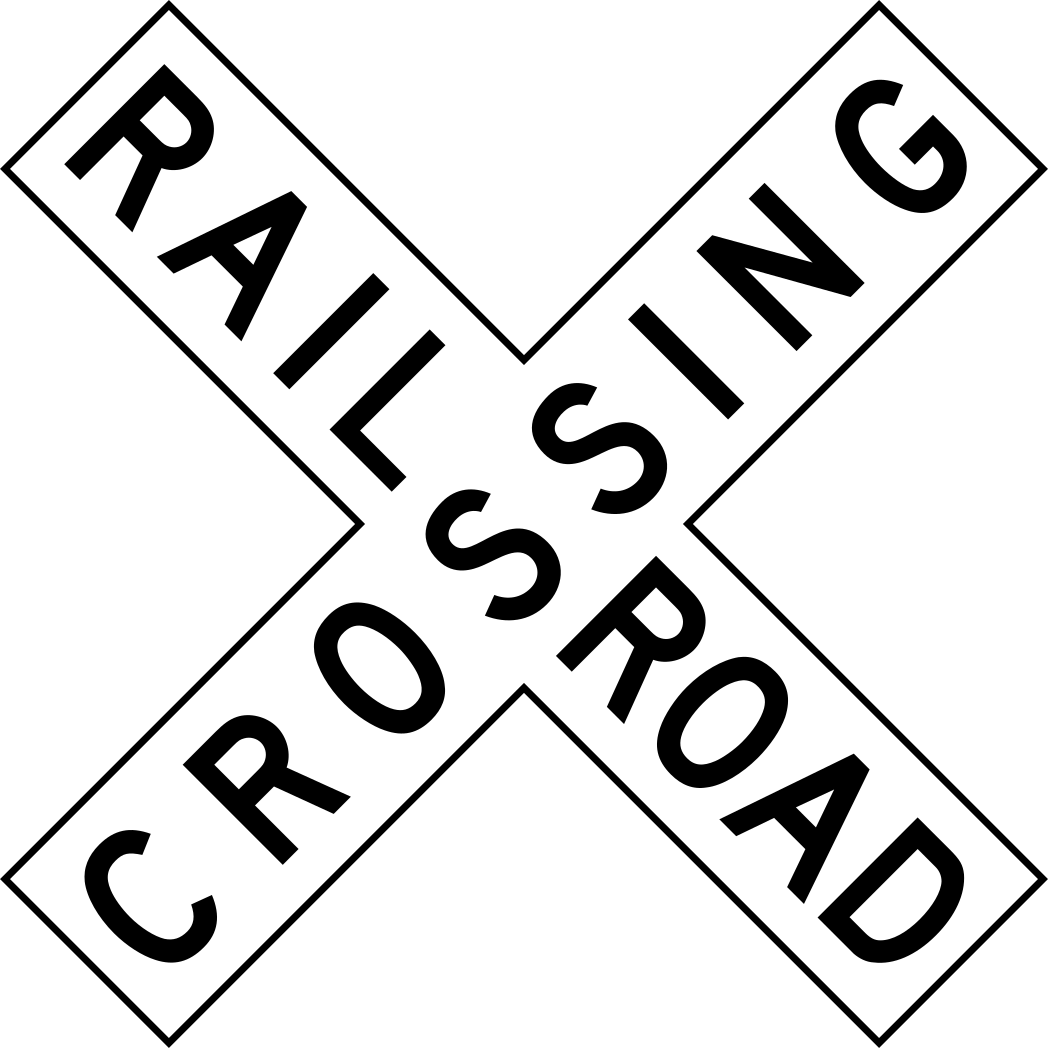 Railroad Crossing (Crossbuck)MUTCD R15-1
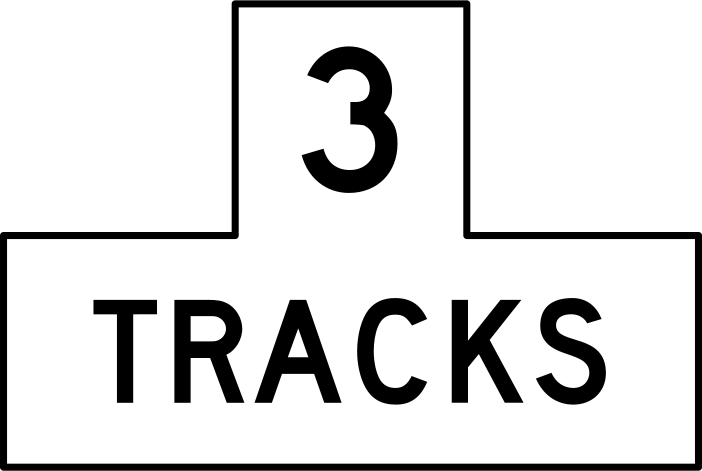 Number of Tracks (plaque)MUTCD R15-2P
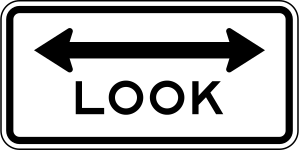 LookMUTCD R15-8
The signs before a crossing
| Sign | Means |
|---|---|
| Round yellow sign with an X | A railroad crossing is ahead: slow down, look and listen |
| Crossbuck (white X) | The crossing itself. Treat it like a yield sign |
| Number of tracks plaque | More than one track: a second train may come |
| Flashing red lights, bells, gates | A train is coming: stop |
| Stop sign at the crossing | Stop every time, train or not |
How to cross safely
- Slow down at the advance warning sign.
- Look both ways and listen. Turn the radio down.
- Stop 15–50 feet back if lights flash, gates lower or you see a train.
- Wait until the lights stop and gates rise completely.
- Look again for a second train on another track.
- Cross only if there's room on the other side for your entire vehicle.
- Don't shift gears on the tracks (manual transmission).
Special rules
- School buses and trucks carrying hazardous materials must stop at every crossing, even with no train in sight. Expect them to stop in front of you.
- Low visibility: California sets a 15 mph limit within 100 feet of a crossing when you can't see 400 feet down the tracks in both directions.
If you're stuck on the tracks
Get everyone out immediately and move away from the tracks, toward the train at an angle, so debris doesn't hit you. Call the emergency number on the blue sign at the crossing (or 911).
Why crossings catch people
Most crossing crashes happen at crossings the driver knows well, often with no gates, just a crossbuck. Familiarity makes people stop looking. A train approaching at an angle is also hard to judge: it looks slower and farther away than it is. Treat every crossing as if a train is coming, because one day one will be.
Practice it
The railroad signs quiz covers every sign and plaque at a crossing.
Take the railroad crossing signs quizStart ›The rule and sources are on rules of the road. For the other vehicles that make you stop, see school bus and emergency vehicle rules.