Four situations make every driver stop or get out of the way, no matter what the light says: a school bus with flashing red lights (stop, usually in both directions), an emergency vehicle with its siren on (pull right and stop), an emergency or tow vehicle stopped at the roadside (move over or slow down), and a train at a railroad crossing (stop 15–50 feet back and wait).
This overview covers each one; the linked guides go deeper.
At a glance
| You see | You do | Guide |
|---|---|---|
| School bus, flashing yellow lights | Slow down; get ready to stop | [school bus rules](/blog/school-bus-divided-highway) |
| School bus, flashing red lights, stop arm out | Stop; stay stopped until the lights stop | [school bus rules](/blog/school-bus-divided-highway) |
| Siren and lights coming | Pull to the right edge and stop | [emergency vehicle behind you](/blog/emergency-vehicle-behind-you) |
| Emergency or tow vehicle stopped at the roadside | Move over a lane, or slow down | [Move Over law](/blog/move-over-law) |
| Railroad lights flashing, gates down | Stop 15–50 feet from the nearest rail | Below |
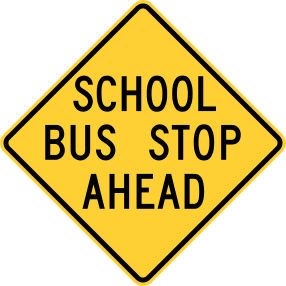 School Bus Stop AheadMUTCD S3-1
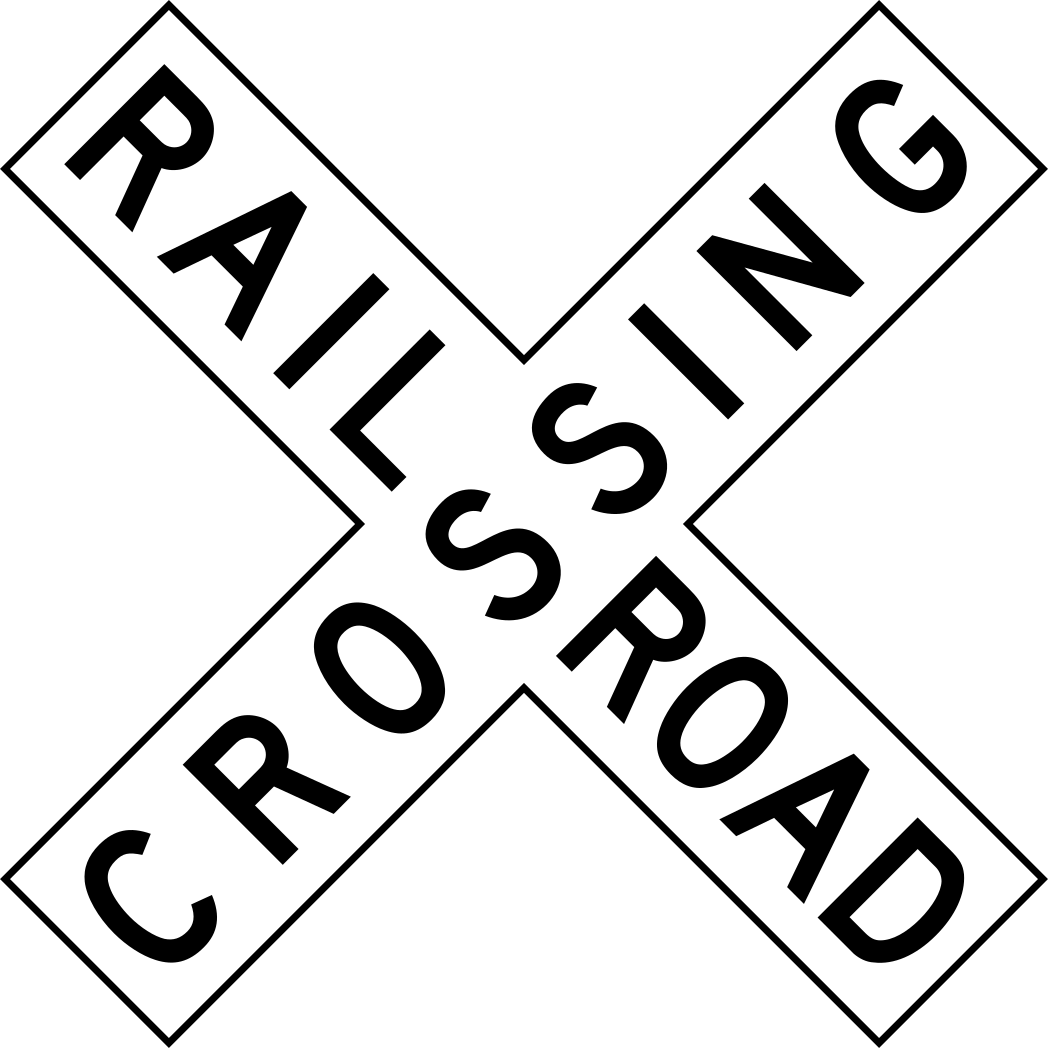 Railroad Crossing (Crossbuck)MUTCD R15-1
 Railroad Crossing AheadMUTCD W10-1
School buses
When a bus stops and flashes red lights with its stop arm out, traffic behind it stops, and on an undivided road traffic coming toward it stops too. Children cross in front of the bus. You may go when the red lights stop flashing. On a divided highway with a median, traffic on the other side usually keeps going; the details differ by state.
Emergency vehicles on the move
Signal, pull to the right edge and stop. If you're in an intersection, drive through first. On a multi-lane road every lane moves right. Don't follow it: California makes it illegal to follow within 300 feet of an emergency vehicle with its lights on.
Emergency vehicles stopped at the roadside
Every state has a Move Over law. Change to the lane farther away if you safely can; otherwise slow down well below the limit as you pass.
Trains
When lights flash, gates come down or a train is close, stop at least 15 feet (and no more than 50 feet) from the nearest rail. Wait until the lights stop and the gates rise, and look for a second train before you cross. Never stop on the tracks: don't start across unless there's room for your whole car on the other side.
Why these four are different
In all four cases, someone else's safety depends entirely on you: children crossing, a crew working inches from traffic, an ambulance with a patient, a train that can't brake in time. That's why the penalties are high and why the permit test always includes them.
Practice it
The Sirens roads in Road Sign Adventure put all four on the road: an ambulance behind you, a police car on the shoulder, school buses in both directions and railroad crossings.
Drive the Sirens roads in Road Sign AdventureStart ›Sources: school bus, emergency vehicles, Move Over, railroad crossings.